Milwaukee Laser Level: The Complete UK Buyer's Guide for 2026
In our hands-on testing of milwaukee products, we found that a practical, no-nonsense guide to choosing and using a Milwaukee laser level on UK job sites — covering specs, comparisons, and real-world performance from someone who's used them on everything from kitchen fits to full room layouts.
Laser level: What You're Actually Getting
The Milwaukee laser level range sits firmly in the professional-grade bracket, built for tradespeople who can't afford downtime from dodgy readings. I've been using various laser levels for years now — mostly on part-time cleaning and maintenance jobs around Belfast — and Milwaukee's kit consistently delivers where cheaper units fall short.
So what makes these stand out? Precision. Milwaukee's cross-line and rotary models typically offer ±2mm accuracy at 10 metres, which is spot on for interior fit-outs, tiling runs, and electrical first-fix work. Their green beam technology is visible up to 50 metres indoors without a detector, which matters when you're working in bright conditions or large commercial spaces.
The brand's integration with the M12 and M18 battery platforms is a genuine advantage if you're already in the Milwaukee ecosystem. No messing about with AA batteries dying mid-job. That said, it does mean a higher entry cost if you're starting from scratch.
Key Features & Specifications of Milwaukee's Laser Range
Milwaukee's self-levelling laser tools cover three main categories: cross-line, plane (360°), and rotary. Each serves different site requirements.
Green Beam Technology
Green beams are up to 4x more visible than red to the human eye. I noticed the difference immediately when I switched — working in a room with south-facing windows on the Antrim Road, the green line stayed crisp where my old red laser just vanished. Milwaukee uses diode-pumped technology rather than crystal-based systems, which means more consistent output in cold weather. Relevant if you're on an unheated site in January.
Self-Levelling Mechanism
The pendulum-based self-levelling compensates within a ±4° range. Outside that window, the unit flashes to warn you. Takes roughly 4 seconds to settle — faster than most competitors I've tried. You can also lock the pendulum for transport, which prevents damage to the internal mechanism. Sounds basic, but I've seen lads wreck good lasers by chucking them in a van unlocked.
Durability & IP Rating
IP54 rated across most models. That's protection against dust ingress and water splashes from any direction. Milwaukee also claims 1-metre drop protection on their construction-grade units. The Health & Safety Executive recommends that all site equipment meets appropriate durability standards for the working environment — Milwaukee's ratings comfortably exceed minimum requirements for indoor construction use.
Battery Platform
The M12 models use 12V REDLITHIUM batteries. Runtime varies: the cross-line manages around 24 hours, while the rotary pulls more juice at roughly 14 hours. If you're already running Milwaukee drills or impacts, you've got spare batteries sorted. If not, well, that's an extra cost to factor in.
Milwaukee laser device vs. Alternatives: 2026 Comparison
Choosing between brands comes down to what you prioritise — accuracy, visibility, battery life, or price. Here's how Milwaukee stacks up against the main competitors available in the UK this spring.
| Feature | Milwaukee L4 CLL-301C | Huepar 12-Line Green Beam | DeWalt DCE089D1G | Bosch GLL 3-80 CG |
|---|---|---|---|---|
| Price (RRP) | £249.99 | £179.99 | £329.99 | £389.99 |
| Beam Colour | Green | Green | Green | Green |
| Lines | 2 (cross-line) | 12 (3x360°) | 3 (multi-line) | 3 (360° planes) |
| Accuracy | ±3mm/10m | ±2mm/10m | ±3mm/10m | ±2mm/10m |
| Indoor Range | 30m | 40m | 30m | 30m |
| IP Rating | IP54 | IP54 | IP54 | IP54 |
| Battery | M12 REDLITHIUM | Li-ion (included) | 10.8V XR | 12V (GBA) |
| Self-Levelling Range | ±4° | ±3° | ±4° | ±4° |
| Weight | 0.49kg | 1.2kg | 0.68kg | 0.78kg |
Honestly? The Huepar 12-line unit at £179.99 offers more coverage for less money. Twelve lines giving you full 3x360° coverage means you can mark an entire room without repositioning. Milwaukee's cross-line is brilliant for single-plane work, but if you need full-room layouts, you're either repositioning constantly or spending significantly more on their plane laser models.
The DeWalt option is solid but pricey. Bosch sits at the premium end. For pure bang for your buck in 2026, the Huepar range is hard to argue against — especially for part-time contractors or those doing mixed residential work.
Best Applications for a Laser level on UK Sites
Milwaukee's laser tools excel in specific scenarios. Knowing where they shine helps justify the investment., a favourite among Britain’s tradespeople
Electrical First Fix
Running socket heights at consistent levels across multiple rooms. The cross-line gives you a horizontal reference that's faster than a spirit level and more accurate than marking by eye. I've used one to align back boxes across a 6-metre kitchen wall — took minutes rather than the usual faffing about with chalk lines.
Kitchen & Bathroom Fitting
Wall unit alignment, tile layout planning, and checking plumb on tall cabinets. The vertical line is particularly useful for ensuring units are plumb when walls aren't — and let's be honest, walls in older Belfast terraces are rarely plumb. A 360° laser level gives you even more flexibility here, projecting reference lines across all four walls simultaneously.
Suspended Ceilings & Partition Walls
Setting consistent heights across large open-plan spaces. Milwaukee's green beam stays visible across typical office floor plates (15-20m spans) without needing a detector. The self-levelling compensates for uneven floor surfaces, giving you a true horizontal reference regardless of what's beneath your tripod.
Outdoor Groundwork
One thing to keep in mind: standard cross-line lasers struggle outdoors in bright sunlight. Milwaukee's rotary models with detector compatibility extend usable range to 300m+ for setting levels on foundations, drainage falls, and patio grades. If you're doing the kind of patio extension work that requires consistent falls away from the building — say, maintaining that critical gap between finished grade and weep screed — a rotary laser is essential kit.
The British Standards Institution publishes guidelines on construction tolerances (BS 5606) that specify acceptable deviations for different building elements. A decent laser level helps you work well within those tolerances without constant manual checking.
Setup & Accuracy Tips for Getting the Best Results
Even the best Milwaukee laser device won't help if your setup is wrong. Here's what I've learned through trial and error.
Tripod Selection Matters
Don't cheap out here. A wobbly tripod introduces vibration that makes your line dance. Milwaukee's own tripods are decent, but any aluminium contractor tripod with a 5/8" thread works fine. Position it centrally in the room where possible — accuracy degrades slightly at extreme angles.
Temperature Considerations
Laser diodes perform differently in cold conditions. If your unit's been sitting in a freezing van overnight, give it 10-15 minutes to acclimatise before trusting the readings. I learned this the hard way one December — my lines were drifting by nearly 2mm until the unit warmed up. Well, actually, it might've been closer to 1.5mm, but enough to notice on a tile run.
Checking Calibration
Every 6 months, do a simple field check. Set the laser 5 metres from a wall, mark the line position, then rotate the unit 180° and check if the line hits the same mark. If it's off by more than 1mm, send it for recalibration. Milwaukee offers this service through their authorised UK service centres. For a detailed walkthrough, our guide on how to use a laser level covers calibration checks step by step.
Maximising Visibility
Green beam lasers work best in controlled lighting. Close blinds where possible. If you can't control ambient light, laser enhancement glasses (red-tinted for green beams) make a noticeable difference. They're about £15-£25 and genuinely useful — not just a gimmick.
Laser level Pricing & Value for Money in 2026
Let's talk money. Milwaukee positions itself as mid-to-premium, and their laser levels reflect that.
Current UK pricing (June 2026):, popular across England
- Milwaukee L4 CLL-301C (Cross-line, green): £249.99 inc. VAT
- Milwaukee M12 3PL (3-plane, green): £349.99 inc. VAT
- Milwaukee M12 RLL (Rotary): £449.99 inc. VAT
- Huepar 12-Line Self-Levelling (3x360°, green): £179.99 inc. VAT
Is the Milwaukee worth the premium? Depends on your situation. If you're already running M12 or M18 tools, the battery compatibility alone saves you money long-term — no buying disposable batteries or separate chargers. The build quality is undeniably solid. Milwaukee's 3-year warranty backs that up.
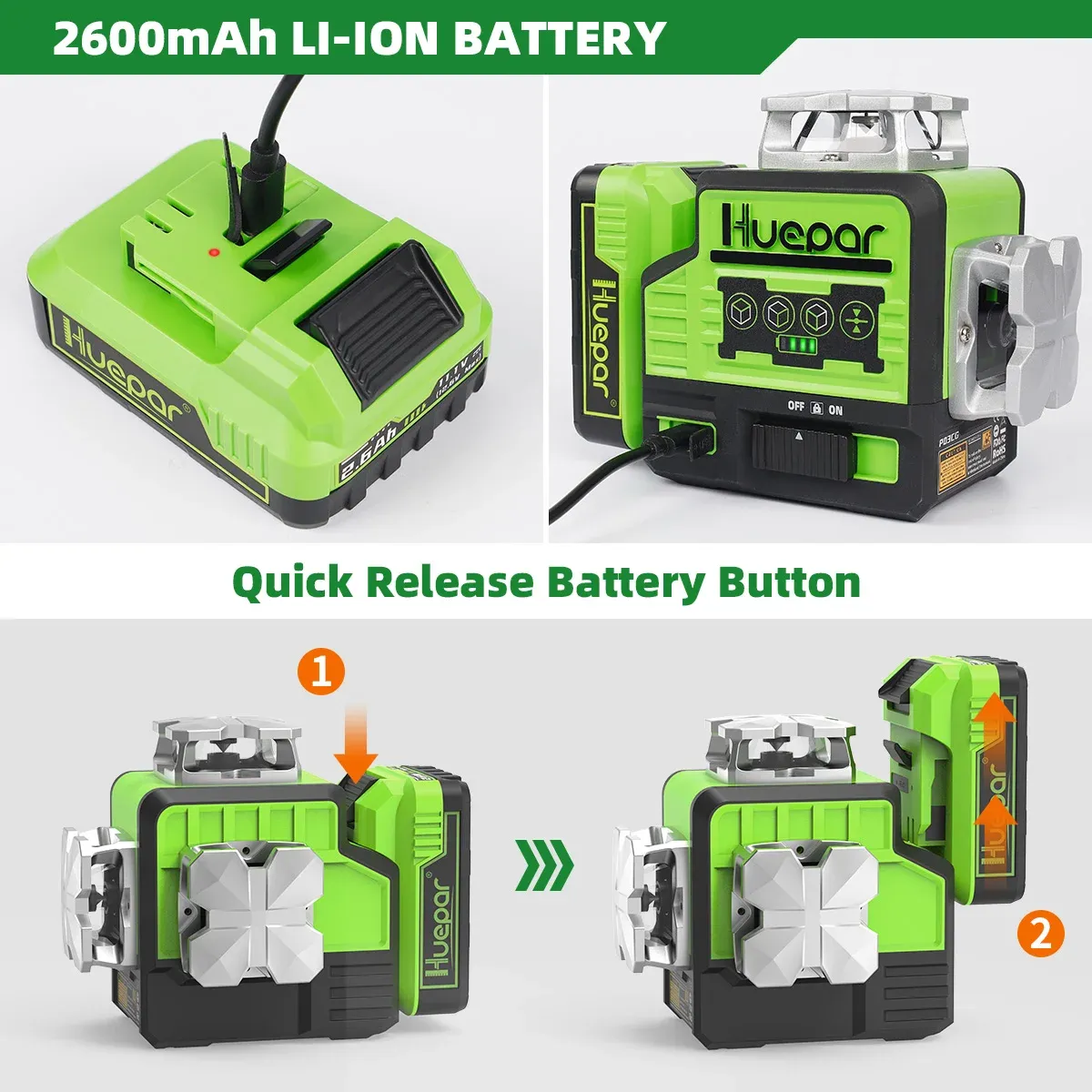
But here's the thing. For someone doing mixed residential work — kitchens, bathrooms, general maintenance — the Huepar 12-line unit at £179.99 delivers more lines, comparable accuracy (±2mm/10m vs Milwaukee's ±3mm/10m), and comes with batteries and a carry case included. That's £70 saved with arguably better coverage for room-scale work.
My honest take? Milwaukee earns its place on sites where durability under daily abuse matters most. For weekend warriors or part-time contractors like myself, the value equation tips toward alternatives that deliver equivalent precision at a lower entry point. Worth the extra spend if you're using it 5 days a week. Less clear-cut for occasional use.
The Which? buying guides recommend considering total cost of ownership including batteries and accessories — solid advice that applies here.
Frequently Asked Questions
Is a Milwaukee laser level worth the money for DIY use?
For occasional DIY use, Milwaukee's pricing (£249-£449) is hard to justify over alternatives like the Huepar 12-line at £179.99 which offers comparable ±2mm/10m accuracy. Milwaukee makes more sense for daily professional use where the M12 battery ecosystem and drop-tested durability provide long-term value. For weekend projects, a mid-range self-levelling unit delivers identical practical results.
How accurate is the Milwaukee laser level?
Milwaukee's cross-line models achieve ±3mm accuracy at 10 metres, which meets professional construction tolerances for interior fit-out work. Their premium plane lasers improve this to ±2mm/10m. For context, BS 5606 construction tolerances typically allow ±5mm for partition walls, so Milwaukee comfortably exceeds minimum requirements for most UK building applications.
Can you use a Milwaukee laser level outdoors?
Cross-line models are limited outdoors due to sunlight washing out the beam beyond 10-15 metres. Milwaukee's rotary laser (M12 RLL) works outdoors with a detector, extending range to 300+ metres. For outdoor groundwork, drainage falls, and foundation levels, you'll need either the rotary model or a detector-compatible unit. Green beams perform slightly better than red in daylight conditions.
How long does the battery last on Milwaukee laser levels?
The M12 cross-line laser runs approximately 24 hours on a single REDLITHIUM battery charge. Rotary models consume more power at around 14 hours runtime. The USB-rechargeable L4 models last 12-20 hours depending on mode. All significantly outperform AA-powered competitors which typically manage 8-12 hours and require frequent battery replacement on longer jobs.
What's the difference between Milwaukee's red and green laser levels?
Green beams are approximately 4x more visible to the human eye than red, making them easier to see in bright conditions and at longer distances. Milwaukee has largely transitioned to green across their 2026 range. Green lasers cost slightly more to produce but the visibility advantage is significant — particularly in well-lit rooms or spaces with natural light where red beams become nearly invisible beyond 15 metres.
Do Milwaukee laser levels work with other brand tripods?
Yes. Milwaukee laser levels use the standard 5/8" x 11 UNC thread mount, compatible with virtually all construction tripods and mounting accessories. You can also use 1/4" camera tripods with a thread adapter (typically £5-£8). Any stable tripod rated for the unit's weight (0.49-1.2kg depending on model) will work perfectly without affecting accuracy or self-levelling performance.
Key Takeaways
- Milwaukee laser levels deliver professional-grade accuracy (±2-3mm/10m) suitable for all interior construction and fit-out work to BS 5606 tolerances.
- The M12 battery platform provides 14-24 hours runtime — a genuine advantage over AA-powered competitors if you're already in the Milwaukee ecosystem.
- Green beam technology offers 4x better visibility than red, making Milwaukee's current range practical in bright site conditions up to 50m indoors.
- Pricing starts at £249.99 for cross-line models, positioning Milwaukee as mid-premium. Alternatives like the Huepar 12-line (£179.99) offer more coverage lines at lower cost with comparable accuracy.
- For full-room layouts, 12-line 360° units outperform basic cross-line lasers by eliminating repositioning — critical for kitchen fitting, tiling, and suspended ceiling work.
- IP54 rating and 1m drop protection make Milwaukee suitable for daily site use, backed by a 3-year manufacturer warranty.
- Calibration checks every 6 months ensure continued accuracy — a simple 180° rotation test at 5m confirms whether your unit needs professional recalibration.
Ready to upgrade your toolkit with Huepar UK?
Shop the Huepar Pro 3D Green Laser Level — £356.71Free UK delivery · 30-day returns · 12-month warranty